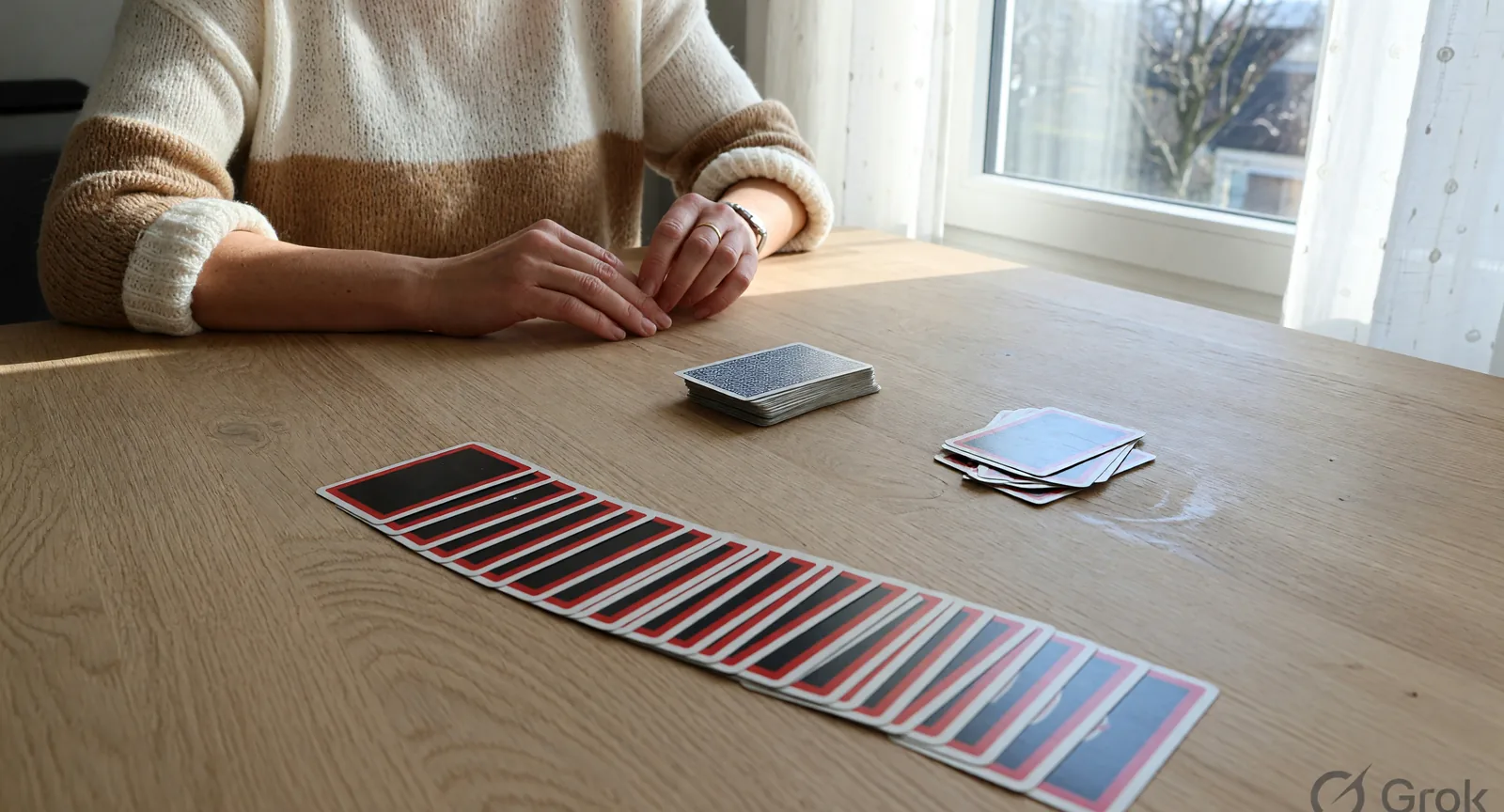
13 is a count of cards, not a promise
You start a common 13-card deal with 13 cards. That number measures the hand you must organize. It does not measure how often a table pays. Anyone who treats 13 as a lucky rate is reading the wrong instrument.
The path is pickup, meld, declare. Each step can fail on its own. This walk stays on that path. Format clocks live on the comparison. Boundary notes live on the skill page.
Draw, discard or declare
On your turn you take one card: the open discard or the closed stock. Then you discard one card, unless you are declaring. Declaring is not a third mood. It is a claim that the 13 cards now on the table meet the printed test.
If you cannot name the pure sequence in your hand, you are not ready to declare. Draw or discard instead. A fast timer does not change the test.
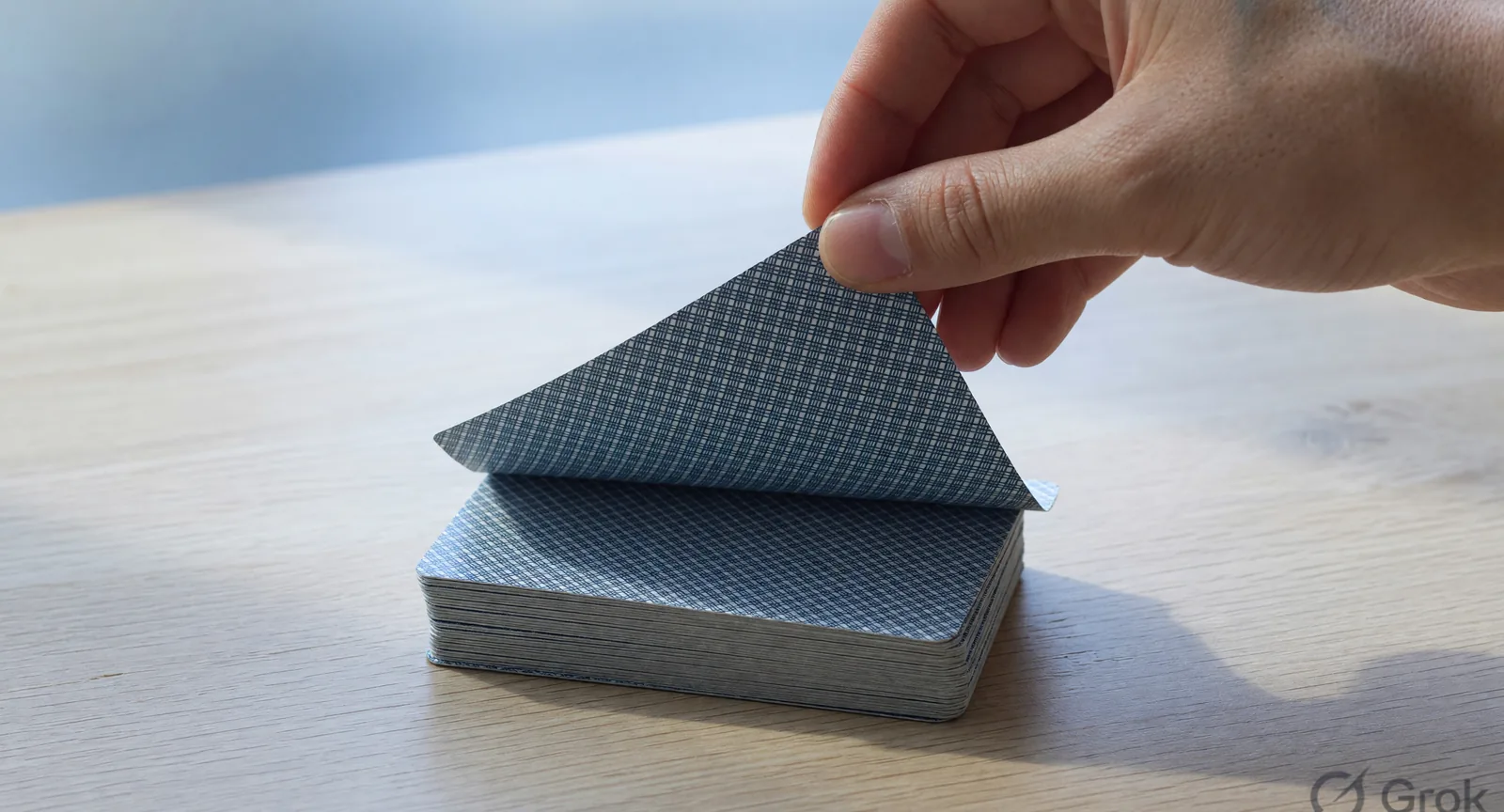
Pickup traps that end a legal hand early
Taking a discard because it is the same rank as a card you like is not a plan. The discard is public. Other seats saw it. If that card does not complete a sequence or a set you can name, leave it.
Taking from the closed stock is chance. That is allowed. It is still chance. Do not tell yourself the next card is due.
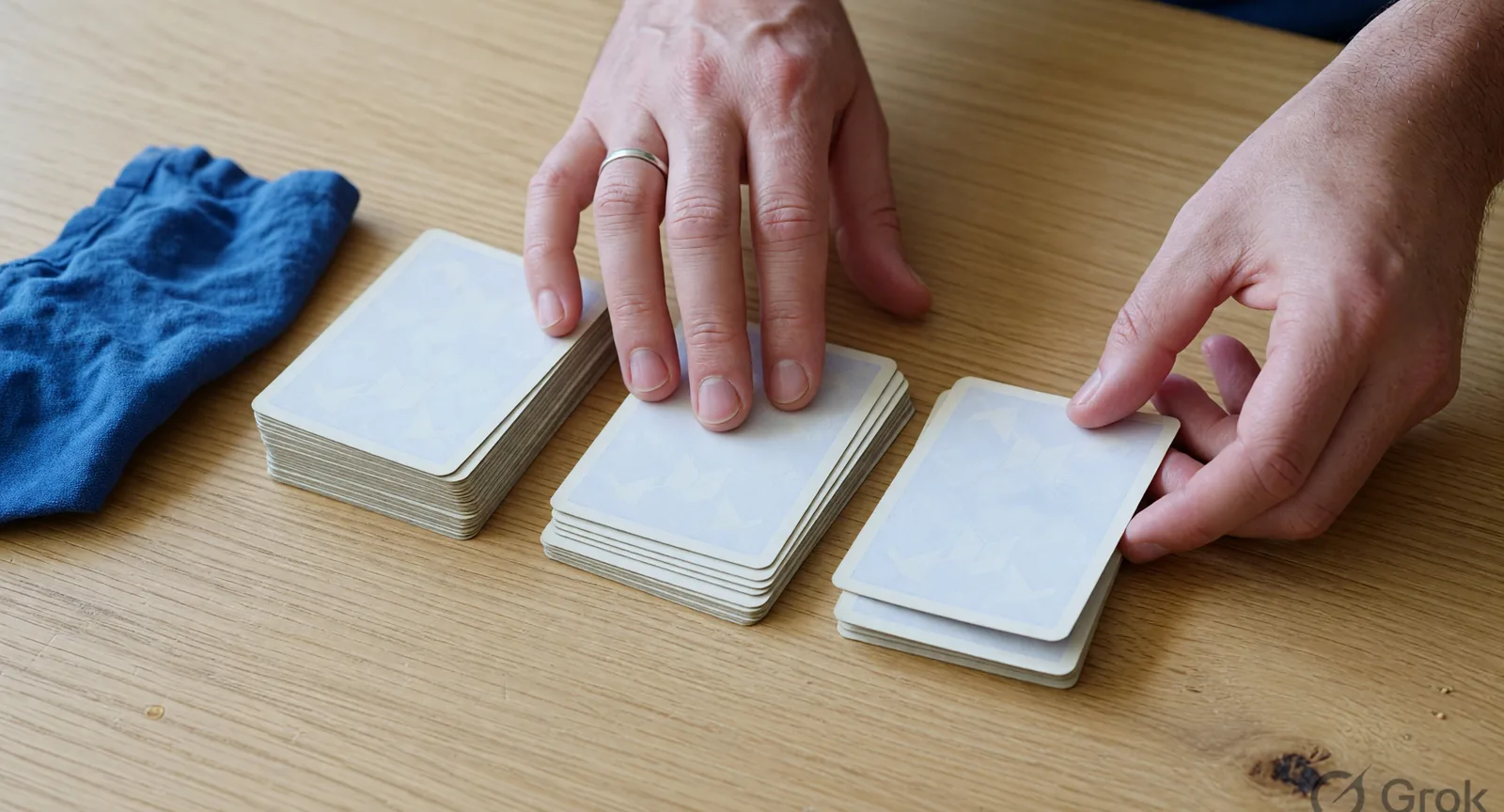
Sequences, sets and the pure-sequence gate
A sequence is three or more consecutive cards of one suit. A set is three or four of one rank. Common Indian-rummy notes require at least two sequences, and one of those sequences must be pure.
Pure means no joker stands in. A joker can help another combination on those conventions. It cannot finish the pure sequence. If a live casinobet table prints a different line, the print wins. This desk has not seen that print.
Invalid-hand traps
Declaring with one sequence and the rest as sets fails the two-sequence test on common notes. Declaring with two sequences that both use jokers fails the pure-sequence test. Declaring with 14 cards because you forgot to discard fails as a miscount.
A 14-point deadwood hand that is otherwise legal is still a legal declare on common notes. An invalid declare with zero deadwood is still invalid. Clean piles do not rescue a missing pure sequence.
A close checklist you can read aloud
- I can point to a pure sequence with no joker.
- I can point to a second sequence.
- Every leftover card sits in a legal set or sequence.
- I am holding 13 cards, not 12 or 14.
- I have read the live table's printed test, not only this desk.
What this walk will not do
It will not rank Points against Pool. It will not tell you which discard wins. It will not invent a casinobet tutorial screenshot.
Open the declaration board above, then use Open casinobet only if you can pass the checklist on a live table.
Open casinobetQuestions at the table edge
What does 13 measure?
Cards in hand at the start of a common Indian-rummy deal, not a win rate and not a casinobet payout.
Can a joker finish the pure sequence?
On common published conventions, no. Confirm the live table if it prints a different house line.
When should I declare?
Only after you can show the required sequences, including one pure sequence, plus the rest as legal sets or sequences.
A full turn told without a win
You look at 13 cards. You name, quietly, one sequence you already have or one you are one card from. You look at the open discard. If that discard is the named card, you take it for that reason. If it is not, you take the closed stock and accept that the card may do no work.
You now hold 14 cards for a moment. You must return to 13 unless you are declaring. You discard the card that sits in no named group and that you can bear to publish. You do not discard into a sequence an opponent has already shown if you have another spare. If every spare advertises something, you still must discard. That is the turn.
Nothing in that turn guarantees the next one. The value of the turn is that each verb had a reason you could say aloud.
Miscounts that look like strategy
Holding 12 cards because a card stuck to another is not a ploy. It is a miscount. Count aloud once if the timer allows. Declaring on 12 or 14 fails the hand shape on common notes even if the groups look pretty.
Sorting too slowly under a visible timer is a usability problem. It is not proof that the table is unfair. If the timer is too short for you to count, leave the seat. There is no prize for a rushed illegal declare.
When to stop reading this walk and sit
Sit only after you can recite the checklist without looking. Sit only after the live table print agrees with the checklist or clearly replaces it. Sit only after you have a format clock from the comparison.
If any of those three are missing, stay here or go back to Games. Open casinobet is the route after the checks, not a substitute for them.
Examples that stay unlabeled as house law
Example A: hearts 4-5-6 with no joker. That packet is a pure sequence on common conventions. Example B: 7-7-7 of mixed suits. That packet is a set. Example C: 9-10-joker of one suit. That packet can be a sequence on common notes, yet it is not pure.
If you declare with B and C only, you fail the two-sequence test and the pure-sequence test at once. If you declare with A, C and B, you pass those two tests on common notes. Confirm the live print before you treat A+B+C as casinobet law.
These examples use ranks so you can rehearse. The photographs on this walk keep faces hidden. The words carry the teaching. The pictures carry the gesture.
Rehearsal without sitting
Rehearse the checklist with a physical deck if you have one. Deal 13. Build one pure sequence first, even if that means breaking a pretty set. Then build the second sequence. Then fill sets. If you cannot finish, you have rehearsed a failed declare. That is useful. A failed declare in rehearsal costs nothing.
If you do not have a deck, rehearse on paper with ranks written as numbers. Paper ranks are not photographs. They are a drill. Do not confuse the drill with a casinobet screen.
Rehearse once more under a two-minute kitchen timer. If the checklist collapses under the timer, you are not ready for a live turn timer. Stay on this walk.
When the rehearsal passes twice, go to the format comparison and pick a clock. Only then is Open casinobet a coherent next action.
Counting, sorting and the two-minute drill
Count the cards in your hand before you name a combination. Say the number. If the number is not 13 after a discard, stop. A beautiful sequence on 12 cards is still a broken hand on common notes. Beauty is not the test.
Sort by suit first, then by rank. Suit-first sorting makes a pure sequence visible. Rank-first sorting makes sets visible and hides broken runs. If you only sort by rank you will invent sequences that are not there.
Run a two-minute drill with a kitchen timer. Deal, sort, name the pure sequence, name the second sequence, name the rest. If you cannot finish the naming, you are not ready for a live turn. Repeat the drill until the naming is boring. Boring is the goal.
Do not add a stake to the drill. A drill with money is a seat. Seats come after the checklist, the format clock and the age line.
If someone teaches you a shortcut that skips the pure sequence, discard the shortcut. The gate is the product. Shortcuts around the gate are how invalid declares get their confidence.
Next
Stock versus discard, in one concrete turn
The open discard is a 7 of some suit you cannot see on this still. If that 7 completes a sequence you already hold two cards of, taking it is a named reason. If you only like sevens, that is not a reason. Draw from the stock and accept the chance.
After the pickup you must discard. Discard the card that does not sit in any named combination and does not advertise a sequence you still need. Advertising is a real cost because the discard is public.
Jokers as a limited tool
On common conventions a printed joker and a wild joker can stand inside a set or a non-pure sequence. They do not reduce the need for one pure sequence. If you spend both jokers before you have that pure sequence, you have spent the flexible cards and still failed the gate.
Timers and illegal hurry
A visible turn timer can push a declare you cannot support. That is a usability fact, not a strategy tip. If the timer is about to end and the checklist fails, discard and survive the hand. An invalid declare can cost more than a late discard on common notes. Confirm the live penalty before you treat that sentence as casinobet policy.